Why High-Calorie Smoothies Work for Healthy Weight Gain
Building lean mass takes a calorie surplus, and the simplest way to stack those extra calories without feeling stuffed at every meal is to blend them into a drink you actually enjoy. A high-calorie smoothie for weight gain can deliver **600 to 1,200 extra calories per serving**, depending on your add-ins, and the liquid format makes it easy to consume between meals without spoiling your appetite for solid food. For US home cooks who want to pack on pounds the right way, blending nutrient-dense ingredients beats relying on processed calorie drinks every single time.
The key is choosing **whole, calorie-dense foods** rather than sugary syrups or candy-loaded frappes. Ingredients like nut butters, full-fat dairy, avocado, and dried fruits add hundreds of extra calories while bringing fiber, vitamins, and minerals to the table. This guide walks you through every ingredient category, blending technique, and recipe formula you need to start making professional-quality weight gain smoothies at home.
—
Quick pick: Compare top-rated Weight Gain options.
Smoothie Ingredients for Weight Gain
The foundation of any weight gain smoothie starts with ingredients that deliver maximum nutrition per bite. Understanding which ingredients contribute the most calories and the best nutrients lets you build a blend that actually supports your body composition goals rather than just adding empty sugar.
**Nutrient-dense fruits** form the flavor base and add natural sugars:
- **Bananas** — One medium banana has roughly 105 calories and provides quick energy from natural fructose and glucose, making it ideal pre- or post-workout.
- **Mangoes** — A cup of diced mango delivers around 99 calories plus a powerful dose of vitamin C and beta-carotene.
- **Dates** — Two Medjool dates add about 130 calories with iron, potassium, and fiber that slow digestion and prevent blood sugar spikes.
- **Avocados** — Half a medium avocado contributes roughly 160 calories and heart-healthy monounsaturated fats that support sustained energy.
**High-calorie nuts and seeds** are the real calorie multipliers:
- **Almonds** — A quarter cup of raw almonds has roughly 210 calories with vitamin E and magnesium.
- **Cashews** — One quarter cup runs about 185 calories and adds copper, which supports iron metabolism.
- **Chia seeds** — Two tablespoons contribute roughly 130 calories plus omega-3 fatty acids and soluble fiber.
- **Hemp seeds** — Three tablespoons deliver around 170 calories with complete plant protein.
**Liquid bases** set the texture and add even more calories:
- Whole milk, oat milk, almond milk (unsweetened), and coconut milk all vary in calorie density. Full-fat dairy adds the most calories per cup, while oat milk offers a creamier mouthfeel that many home cooks prefer.
—
Prepping and Blending Tips
Great smoothies are made in the preparation stage, not just in the blender. Taking a few extra minutes to prep your ingredients properly transforms the texture from gritty and uneven to silky and restaurant-quality.
**Use ripe fruits for maximum sweetness and nutrients.** Underripe bananas lack the sugar content and creaminess you need for a weight gain smoothie. Look for bananas with brown speckles on the peel — those are peak sweetness. Frozen overripe bananas, often called “banana soft-serve,” blend into an incredibly thick, sweet base that rivals any milkshake.
**Soak nuts and seeds before blending to soften them.** Raw almonds and cashews benefit from a 4-to-8-hour soak in cold water. This softens their texture, reduces antinutrients like phytates, and makes your blender’s job significantly easier. If you are short on time, use nut butters instead — they blend instantly and distribute evenly through the smoothie.
**Blend in the right order to protect your motor.** Add liquids first, then soft fruits, then leafy ingredients, and finally hard add-ins like frozen fruit or ice. Run your blender on high speed for **60 to 90 seconds** for the smoothest, creamiest consistency. If your blender struggles, add a splash more liquid to keep the blade spinning freely.
**Common blending mistake:** Adding too much ice. Ice dilutes flavor and adds bulk without meaningful calories. Instead, use frozen fruit — you get the same icy-cold texture with added natural sugars and nutrients.
—
Calorie-Boosting Add-Ins
Once you have your base ingredients, these powerhouse add-ins are what separate a 300-calorie snack from a 900-calorie meal replacement smoothie. Stack two or three of these into any recipe to hit your daily calorie targets without gastric discomfort.
**Nut butters** are the single most efficient calorie booster:
- One tablespoon of almond butter adds roughly 98 calories.
- One tablespoon of peanut butter adds roughly 94 calories.
- One tablespoon of cashew butter adds roughly 93 calories.
Use two to three tablespoons per smoothie for a serious calorie lift without dramatically changing the flavor profile.
**Dairy and dairy alternatives** add creaminess and protein:
- Half a cup of full-fat Greek yogurt contributes roughly 130 calories plus 10 grams of protein.
- A quarter cup of heavy whipping cream adds around 200 calories and creates an indulgently thick texture.
- Cottage cheese blends surprisingly well and adds protein with minimal flavor interference.
**Protein powders** round out the macronutrient profile:
- Whey protein isolate mixes easily and digests quickly, making it ideal post-workout.
- Plant-based protein powders (pea, rice, or hemp blends) work well for those avoiding dairy.
- One scoop typically adds 100 to 130 calories and 20 to 30 grams of protein.
—
Healthy Weight Gain Smoothie Recipes
Recipe 1: Banana, Dates, and Almond Milk Smoothie
**Prep time:** 5 minutes
**Servings:** 1 large or 2 small servings
**Estimated calories:** 680–820 per serving
**Ingredients:**
- 1 cup whole milk or almond milk (unsweetened)
- 1 frozen banana
- 2 Medjool dates, pitted
- 2 tablespoons almond butter
- 1 scoop vanilla whey or plant protein powder
- 1 tablespoon chia seeds
- Half a cup of rolled oats
**Instructions:**
1. Add milk to your blender first.
2. Drop in the frozen banana, dates, and oats.
3. Add almond butter, protein powder, and chia seeds on top.
4. Blend on high for 60 to 90 seconds until completely smooth.
5. Pour into a tall glass and serve immediately.
**Why it works:** This recipe balances quick-burning carbs from the banana and dates with slow-digesting fats from the almond butter and oats. The protein powder rounds out the macronutrient profile, making it an exc nt post-workout recovery drink that actively supports muscle growth.
**Ingredient swap:** Substitute the almond butter with peanut butter or cashew butter if you prefer a different flavor. Swap the whey protein for a plant-based option without changing the calorie count significantly.
—
Recipe 2: Avocado, Mango, and Coconut Milk Smoothie
**Prep time:** 5 minutes
**Servings:** 1 large serving
**Estimated calories:** 750–900 per serving
**Ingredients:**
- 1 cup full-fat coconut milk (canned)
- Half a ripe avocado
- 1 cup frozen mango chunks
- 2 tablespoons cashew butter
- 1 scoop vanilla protein powder
- 1 tablespoon honey (optional)
- 2 tablespoons shredded coconut
**Instructions:**
1. Pour coconut milk into the blender pitcher.
2. Add avocado, mango, and cashew butter.
3. Add protein powder and shredded coconut.
4. Blend for 60 seconds on high until thick and creamy.
5. Taste and stir in honey if additional sweetness is desired.
**Why it works:** The avocado provides monounsaturated fats that support cardiovascular health while adding serious creaminess. Mango brings tropical sweetness and vitamin A, and coconut milk adds medium-chain triglycerides (MCTs) that the body can use for energy quickly. This combination creates a filling, satisfying smoothie that does not taste “healthy” — it tastes like a tropical treat.
**Ingredient swap:** Fresh mango works if you freeze it first. Replace coconut milk with whole milk if you want a lighter coconut flavor and slightly lower calorie count.
—
Recipe 3: Berry, Nut, and Oat Milk Smoothie
**Prep time:** 5 minutes
**Servings:** 1 large serving
**Estimated calories:** 620–780 per serving
**Ingredients:**
- 1 cup oat milk (full-fat or barista-style)
- 1 cup frozen mixed berries
- Quarter cup raw almonds
- Quarter cup frozen cauliflower (for thickness, neutral flavor)
- 1 tablespoon almond butter
- 1 scoop chocolate or berry protein powder
- Half a cup of Greek yogurt
**Instructions:**
1. Combine oat milk, frozen berries, and cauliflower in the blender.
2. Add almonds, almond butter, protein powder, and Greek yogurt.
3. Blend on high for 75 to 90 seconds.
4. Check consistency — add more oat milk if too thick.
**Why it works:** Mixed berries deliver antioxidants and anthocyanins that support recovery and overall health, while the almonds and almond butter add crunch-equivalent calorie density in liquid form. The frozen cauliflower trick is a professional-level hack that adds creaminess and extra nutrients without altering the berry flavor.
**Ingredient swap:** Replace cauliflower with frozen zucchini for a similar thickening effect. Swap the Greek yogurt for cottage cheese to boost protein without changing the calorie total dramatically.
—
Meal Prep and Storage
One of the smartest habits for anyone serious about weight gain is preparing smoothie ingredients ahead of time. Life gets busy, and when your schedule derails, prepped ingredients mean you never miss a calorie-dense meal.
**Pre-portion smoothie bags** are the gold standard for busy mornings:
1. Label a gallon zip-top bag with the recipe name and calorie count.
2. Add all dry or frozen ingredients (fruits, nuts, seeds, oats) to the bag.
3. Squeeze out excess air, seal, and lay flat in the freezer.
4. When ready to blend, drop the entire bag’s contents into the blender, add your liquid and protein powder, and blend.
**Blended smoothie storage:** A fully prepared smoothie keeps in the fridge for **up to 24 hours** in an airtight container. Shake or re-blend briefly before drinking, as ingredients naturally separate over time.
**Freezer storage for later:** Pour leftover smoothie into silicone muffin tins or ice cube trays. Once frozen solid, transfer cubes to a zip-top bag. Drop a handful of cubes into the blender with fresh liquid for a thicker, colder smoothie on busy days. This method extends shelf life to **4 to 6 weeks** without significant nutrient loss.
—
Nutritional Benefits
Beyond simply adding calories, the right weight gain smoothie supports overall health and body composition. Here is how the macronutrients in a well-built smoothie contribute to your goals:
| Nutrient Category | Primary Sources in Smoothies | Health Benefit |
|---|---|---|
| Complex Carbohydrates | Oats, dates, bananas, mango | Sustained energy, stable blood sugar |
| Healthy Fats | Avocado, nut butters, chia, coconut | Hormone production, vitamin absorption |
| Protein | Whey/plant powder, Greek yogurt | Muscle repair, satiety, lean mass gain |
| Fiber | Chia, oats, dates, berries | Digestive health, steady fullness |
| Micronutrients | Mango (vit. A, C), almonds (vit. E, Mg) | Immune support, bone health, recovery |
**Supports muscle growth and recovery.** The combination of protein and carbohydrates after resistance training creates an anabolic window where muscles repair and grow most efficiently. A high-calorie smoothie consumed within 60 minutes of exercise delivers the nutrients muscles need precisely when they need them most.
**Provides sustained energy throughout the day.** Unlike refined sugar snacks that cause energy crashes, the fiber and fat content of a well-constructed smoothie releases glucose slowly into the bloodstream. This keeps energy levels stable and reduces cravings between meals — which matters when you are trying to eat more food overall.
—
Serving Suggestions and Presentation
Even a nutritionally perfect smoothie falls flat if it does not look and feel appealing. These serving suggestions make your weight gain smoothie feel like a deliberate, satisfying meal rather than a rushed supplement drink.
**Glassware matters more than you think.** Pour your smoothie into a tall mason jar or a stemmed glass rather than a disposable plastic cup. The visual presentation triggers psychological satisfaction that translates to perceived fullness and taste quality. Add a wide reusable straw — stainless steel or glass straws are easy to clean and feel more intentional.
**Garnish strategically.** A few extra toppings add texture contrast and visual appeal:
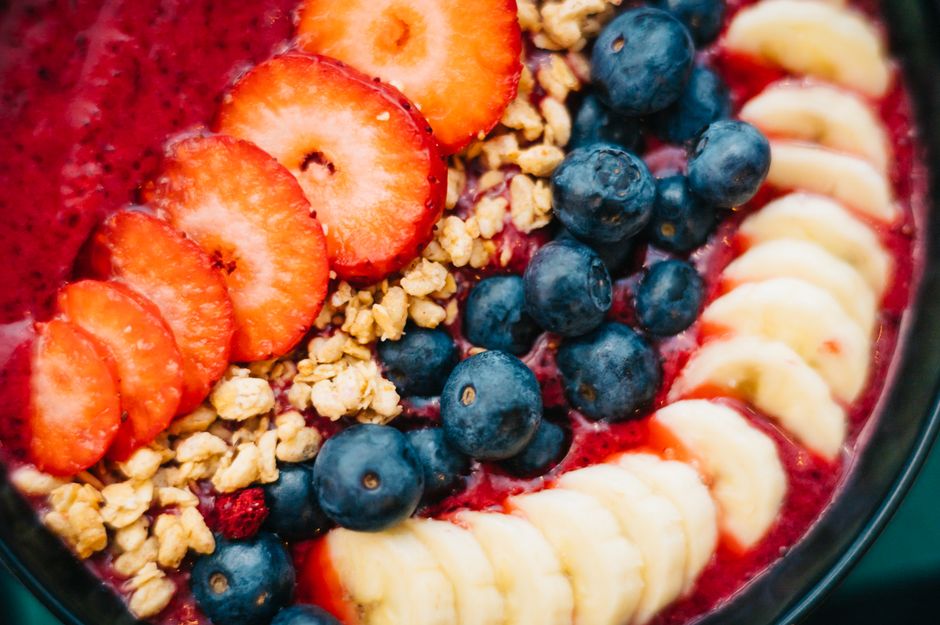
- Sprinkle a handful of granola or extra chopped nuts on top before serving.
- Drizzle nut butter in a spiral pattern over the surface.
- Add a few fresh berries or a slice of banana as a garnish.
- Dust the rim with cocoa powder or cinnamon for a café-style touch.
**Pair with a balanced meal or snack.** A smoothie alone may not feel like enough food at first. Pair it with whole grain toast topped with peanut butter, a small handful of trail mix, or a protein bar to extend the eating experience and add even more calories.
—
Frequently Asked Questions (FAQ)
What makes a smoothie high-calorie for healthy weight gain?
A smoothie becomes genuinely high-calorie when you layer in calorie-dense whole foods like nut butters (roughly 100 calories per tablespoon), full-fat dairy (150+ calories per cup), dried fruits, avocado, and protein powders. The goal is adding 400 to 800 calories per serving using nutrient-rich ingredients rather than sugary syrups, ensuring your calorie surplus also supports your overall health and fitness goals.
Can I use frozen fruits in my weight gain smoothies?
Absolutely — and frozen fruits are actually preferred for smoothies. They create a thick, icy-cold texture that rivals any milkshake while preserving nutrients and extending shelf life. Frozen bananas, mango chunks, mixed berries, and even frozen cauliflower or zucchini all work beautifully and can be purchased in bulk at any US grocery store or warehouse club.
How can I make my smoothie more filling without adding bulk?
The most filling smoothies combine protein, fiber, and healthy fats — the three macronutrients that trigger satiety signals. Add two tablespoons of nut butter, half a cup of Greek yogurt or cottage cheese, a tablespoon of chia seeds, and a scoop of protein powder. This combination creates a thick, satisfying texture that stays with you for hours, making it far easier to maintain a calorie surplus throughout the day without constant snacking.
Top Product Recommendations
| Product Name | Rating | Key Feature | Est. Price | Action |
|---|---|---|---|---|
| Best Weight Gain Pick | ★★★★★ | Top-rated overall | $25–$45 | Check Lowest Price on Amazon |
| Budget Weight Gain Option | ★★★★☆ | Great for beginners | $12–$28 | Check Lowest Price on Amazon |
| Premium Weight Gain Choice | ★★★★☆ | Pro-level results | $50–$90 | Check Lowest Price on Amazon |
Affiliate Disclosure: This post contains affiliate links. We may earn a commission if you buy through our links, at no extra cost to you.
Leave a Reply