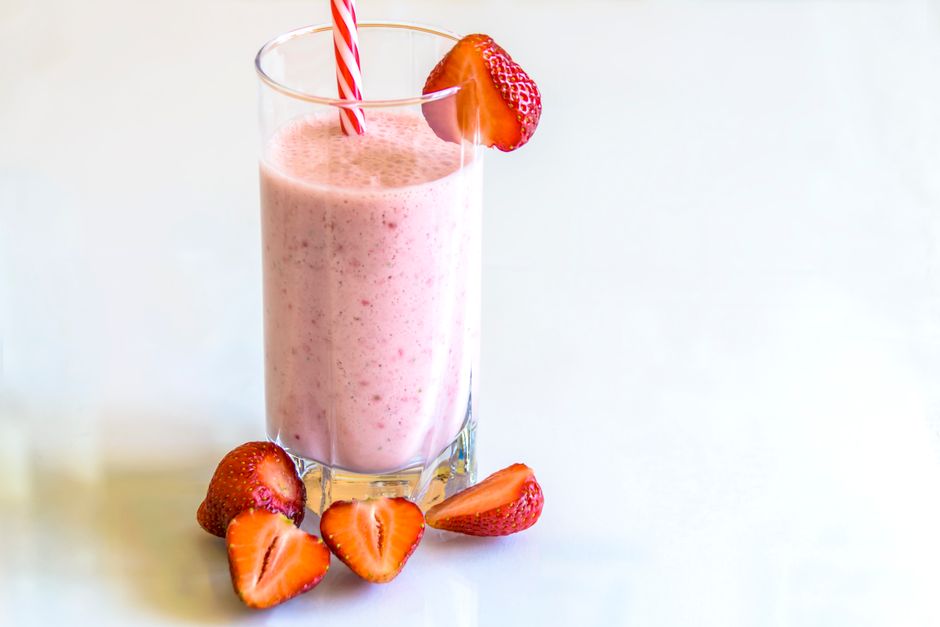
Building muscle and gaining weight takes more than just lifting weights — you need a daily calorie surplus to fuel growth. High-calorie smoothies make that part easy. Rather than choking down huge meals, you can blend everything you need into one portable drink that tastes like a milkshake. This guide walks you through every ingredient, tool, and recipe step so you can start packing on pounds the healthy way.
Why Smoothies Are the Ultimate Weight Gain Tool
Eating enough food to gain weight is genuinely hard for some people. You may have a fast metabolism, a small appetite, or a packed schedule that makes sitting down for three massive meals impossible. Smoothies solve all three problems. You can blend 1,000+ calories in a single glass and drink it on the go. Because the ingredients are blended rather than chewed, your body absorbs nutrients faster, and you avoid the bloated, sluggish feeling that sometimes comes after a huge meal. For anyone serious about bulking up, a daily high-calorie smoothie is one of the simplest habits you can build.
Quick pick: Compare top-rated Weight Gain options.
Stocking Your Pantry: High-Calorie Base Ingredients
The foundation of any weight gain smoothie starts with calorie-dense liquids and fats. **Whole milk** is your best all-purpose base — it adds about 150 calories per cup plus protein and calcium. Heavy cream takes it even further at 340 calories per half-cup, lending a rich, dessert-like texture. If you prefer plant-based options, **oat milk** and **coconut milk from a can** both provide healthy fats and carbs without any dairy.
For thickening and healthy fats, stock your pantry with natural nut butters. **Peanut butter** runs about 190 calories per two-tablespoon serving, while **almond butter** and **cashew butter** offer slightly different flavor profiles. One to two tablespoons per smoothie is the sweet spot — enough to add calories and creaminess without making the drink overly dense. Look for natural butters with no added sugars or oils as your first choice.
The Best Fruits for Maximum Calorie Density
Not all fruits are equal when you are trying to gain weight. **Bananas** are the gold standard — one medium banana adds roughly 105 calories along with potassium for muscle function. They also freeze beautifully, giving your smoothie a thick, frosty texture. **Mango** and **pineapple** bring tropical sweetness and extra calories alongside digestive enzymes. **Dates** (one to three per smoothie) are a hidden weapon — they dissolve completely when blended and add roughly 65 calories each along with fiber.
Frozen fruit is your budget-friendly best friend. It costs less than fresh, lasts for months, and produces an ice-cold thick smoothie without needing extra ice. Stock up on frozen banana chunks, mixed berries with added mango, and pineapple chunks during sales. A two-pound bag of frozen mango runs as little as three dollars at most grocery stores and makes roughly eight high-calorie smoothies.
Nutrient-Dense Add-Ins That Push Calories Higher
Once you have your base and fruit, it is time to supercharge the nutrition profile. **Chia seeds** absorb liquid and expand, adding omega-3s, fiber, and about 60 calories per two tablespoons. **Flaxseed meal** delivers healthy fats and lignans with roughly 55 calories per tablespoon. These ingredients do not change the flavor much but dramatically boost the nutritional density of every glass.
For an extra edge, consider **oats** — rolled oats blended into a smoothie add slow-digesting carbohydrates and about 150 calories per half-cup. **Hemp seeds** contribute about 55 calories per tablespoon along with complete protein. A tablespoon of **coconut oil** or ** MCT oil** adds 120 clean calories that are easy for your body to absorb. Start with small amounts and increase gradually to find what your digestive system handles best.
The Ultimate Chocolate Peanut Butter Protein Smoothie
This recipe is the crowd-pleaser that keeps you coming back for more. It tastes like a Reese’s cup turned into a drink, and it delivers a serious calorie punch in one sitting.
**Ingredients:**
- 2 cups whole milk
- 2 tablespoons natural peanut butter
- 1 scoop chocolate protein powder
- 1 frozen banana
- 2 tablespoons rolled oats
- 1 tablespoon chia seeds
- 1 tablespoon cacao powder
- 1 teaspoon vanilla extract
Blend all ingredients on high for 60 seconds until completely smooth. Pour into a large glass and drink immediately. This recipe makes approximately 720 calories with 48 grams of protein.
**Common mistake:** Adding too much ice or frozen fruit at once can overwhelm a weaker blender. Always start with the liquid, then add soft ingredients, then frozen items last. If your blender stalls, add a splash more milk and try again.
Vanilla Almond Cream Smoothie
If you want something lighter-tasting but still heavy on calories, this vanilla-forward recipe hits the mark. The almond butter and cream combine for a rich, nutty flavor that feels indulgent.
**Ingredients:**
- 1.5 cups whole milk
- 1.5 cups vanilla Greek yogurt
- 2 tablespoons almond butter
- 1 frozen banana
- 1 tablespoon honey (or to taste)
- 1 teaspoon vanilla extract
- 1 tablespoon flaxseed meal
- 0.5 teaspoon cinnamon
Blend on high for 45 seconds. This makes roughly 680 calories with 34 grams of protein.
**Swaps:** Replace the almond butter with cashew butter for a sweeter, milder flavor. Substitute maple syrup for honey if you prefer. Switch to oat milk for a dairy-free version that still packs 480 calories.
Mango Pineapple Coconut Tropical Smoothie
This tropical blend transports you to a beach while delivering a wallop of calories. The canned coconut milk is the secret weapon — it adds rich texture, healthy medium-chain triglycerides (MCTs), and about 445 calories per cup.
**Ingredients:**
- 1 cup canned coconut milk (full-fat)
- 0.5 cup whole milk
- 1 cup frozen mango chunks
- 0.5 cup frozen pineapple chunks
- 1 frozen banana
- 2 tablespoons coconut flakes (unsweetened)
- 1 tablespoon honey
- 1 scoop vanilla protein powder (optional)
Blend until smooth. This tropical smoothie delivers approximately 760 calories per serving.
**Tip:** Shake the can of coconut milk well before opening to mix the cream and liquid together, preventing clumping in your blender.
Green Muscle-Building Smoothie
You do not have to sacrifice nutrition for calories. This green powerhouse proves that you can pack in 600+ calories while also flooding your body with vitamins, minerals, and antioxidants.
**Ingredients:**
- 1 cup whole milk
- 1 cup spinach (raw)
- 0.5 cup kale (stems removed)
- 1 frozen banana
- 0.5 cup frozen mango
- 2 tablespoons almond butter
- 1 tablespoon chia seeds
- 1 tablespoon hemp seeds
- 1 teaspoon spirulina powder
- 0.5 cup Greek yogurt
Blend spinach and milk first to break down the greens completely, then add remaining ingredients. Blend for 90 seconds on high. Total: approximately 640 calories with 28 grams of protein.
**Mistake to avoid:** Adding too much green leafy vegetable at once can make the smoothie bitter. Always start with one cup of greens, and pair them with sweet frozen fruit and banana to mask any earthy flavor.
Smoothie Meal Prep: Save Time Without Sacrificing Gains
The biggest reason people quit on weight gain smoothies is thinking they have to assemble everything from scratch every single day. Meal prepping your smoothie ingredients eliminates that friction entirely. Spend 20 minutes on a Sunday, and you have ready-to-blend portions for the entire week.
The easiest method is the **freezer bag system**. Portion out your frozen fruits, chia seeds, oats, and any dry add-ins into labeled gallon freezer bags. When you are ready to blend, drop one bag into your blender, add your liquid and protein powder, and blend. No measuring, no mess, no excuses. Label each bag with the recipe name and calorie count so you always know what you are getting.
You can also prep overnight oats jars. Combine rolled oats, chia seeds, a splash of milk, and a touch of honey in a mason jar. Refrigerate overnight. In the morning, dump the oats into your blender with your other ingredients — this adds texture and fiber that whole smoothies sometimes lack.
Must-Have Kitchen Gadgets for Smoothie Success
A good blender is the single most important investment for any weight gain smoothie routine. A **high-speed blender** (such as models from major appliance brands in the 1,000+ watt range) breaks down frozen fruit, seeds, and nut butters into a silky smooth consistency in under a minute. Cheaper blenders leave grainy textures that make it hard to enjoy your drink consistently.
**Single-serve blender cups** that blend and seal are a game changer for people on the go. Load the cup with your prepped ingredients in the morning, blend at your desk or kitchen counter, then swap the blade for a lid and take your smoothie with you. These work especially well for post-workout nutrition when you need calories fast.
If you love frozen treats, an **ice cream maker** attachment for your stand mixer can turn any of these smoothie recipes into a high-calorie frozen dessert. Freeze the blended mixture in the ice cream maker for 20 minutes, and you have a weight gain “ice cream” that feels like a cheat day but is pure nutrition.
Budget-Friendly Strategies for Building Bulk Without Breaking the Bank
Gaining weight does not have to mean spending a fortune. These cost-cutting strategies keep your calorie goals within reach even on a tight budget.
Buy **frozen fruit in bulk bags** rather than small packages. Stores like warehouse clubs and discount grocery outlets sell two to three pounds of frozen mixed fruit for under five dollars. **Generic store-brand protein powder** typically costs 30 to 40 percent less than name brands and often contains identical formulations. **Rolled oats in bulk bins** cost pennies per serving compared to individual packets.
Seasonal produce is significantly cheaper and often more flavorful. Stock up on whatever fruit is cheapest at your local farmers market or grocery store, portion it on baking sheets, freeze it, and transfer to freezer bags. Peaches in summer, apples in fall — you can adapt every recipe to whatever is affordable that week.
| Ingredient | Calories per Serving | Cost per Serving (approx.) | Best Buy Location |
|---|---|---|---|
| Whole milk (1 cup) | 150 | $0.25 | Any grocery store |
| Natural peanut butter (2 tbsp) | 190 | $0.20 | Bulk bins or club stores |
| Frozen banana (1 medium) | 105 | $0.15 | Freeze yourself |
| Rolled oats (0.5 cup) | 150 | $0.10 | Bulk bins |
| Chia seeds (2 tbsp) | 130 | $0.35 | Health food stores |
| Canned coconut milk (1 cup) | 445 | $0.50 | International aisle |
Storing and Freezing Your Smoothies for Later
Sometimes you blend more than you can drink in one sitting. The good news is that most high-calorie smoothies freeze and store remarkably well. Pour any leftover smoothie into a freezer-safe mason jar, leaving one inch of headspace for expansion. Freeze flat in a freezer bag for maximum storage efficiency. Most smoothies stay fresh for up to three months when properly stored.
To thaw, move a frozen smoothie jar from the freezer to the refrigerator the night before you plan to drink it. In the morning, shake or stir well — separation is normal and expected. If the texture seems too thin after thawing, blend briefly with a splash of fresh milk or a few ice cubes to restore the original consistency.
For refrigerator storage (not freezer), consume within 24 to 48 hours. Vitamins begin degrading after two days, and the flavor profile shifts. Write the blend date on each jar with a marker so you never guess whether a smoothie is still good.
Frequently Asked Questions (FAQ)
What is the best time to drink a smoothie for weight gain?
Drinking your high-calorie smoothie immediately after a workout or between major meals works best for weight gain. This timing takes advantage of your body’s heightened nutrient absorption window after training and helps you hit your daily calorie target without feeling overly full during main meals.
Can I add protein powder and supplements to my smoothie?
Absolutely. Protein powder is one of the most effective add-ins for bulking, boosting your per-serving protein significantly without changing the flavor. You can also add spirulina, maca powder, wheatgrass, or a daily multivitamin powder to increase the nutritional profile. Start with one supplement at a time so you can identify what your body tolerates well.
How can I make my smoothie thicker and more filling?
The easiest fix is using more frozen fruit — especially frozen banana, mango, and pineapple. Adding chia seeds or flaxseed meal absorbs liquid and creates a thicker, pudding-like texture. Reducing the amount of liquid in your recipe by 25 percent also produces a much denser result. If you blend with extra ice, your smoothie will be thicker but will water down slightly as the ice melts.
How many calories should I aim for in a daily weight gain smoothie?
Most people looking to gain weight healthily should target one to two smoothies per day in the 500 to 800 calorie range each. Pair that with two to three regular meals, and you create a sustainable daily surplus of 500 to 1,000 calories above your maintenance level — the sweet spot for gradual, lean weight gain rather than pure fat accumulation.
Top Product Recommendations
| Product Name | Rating | Key Feature | Est. Price | Action |
|---|---|---|---|---|
| Top-rated natural peanut butter for smoothies | ★★★★★ | Editor-recommended natural peanut butter for smoothies from this guide | $18–$42 | Check Lowest Price on Amazon |
| Best-value high speed blender for protein shakes | ★★★★☆ | Affordable high speed blender for protein shakes — strong everyday results | $12–$28 | Check Lowest Price on Amazon |
| Premium chocolate protein powder for weight gain | ★★★★☆ | Higher-end chocolate protein powder for weight gain for visible, lasting results | $45–$95 | Check Lowest Price on Amazon |
Affiliate Disclosure: This post contains affiliate links. We may earn a commission if you buy through our links, at no extra cost to you.
Leave a Reply